
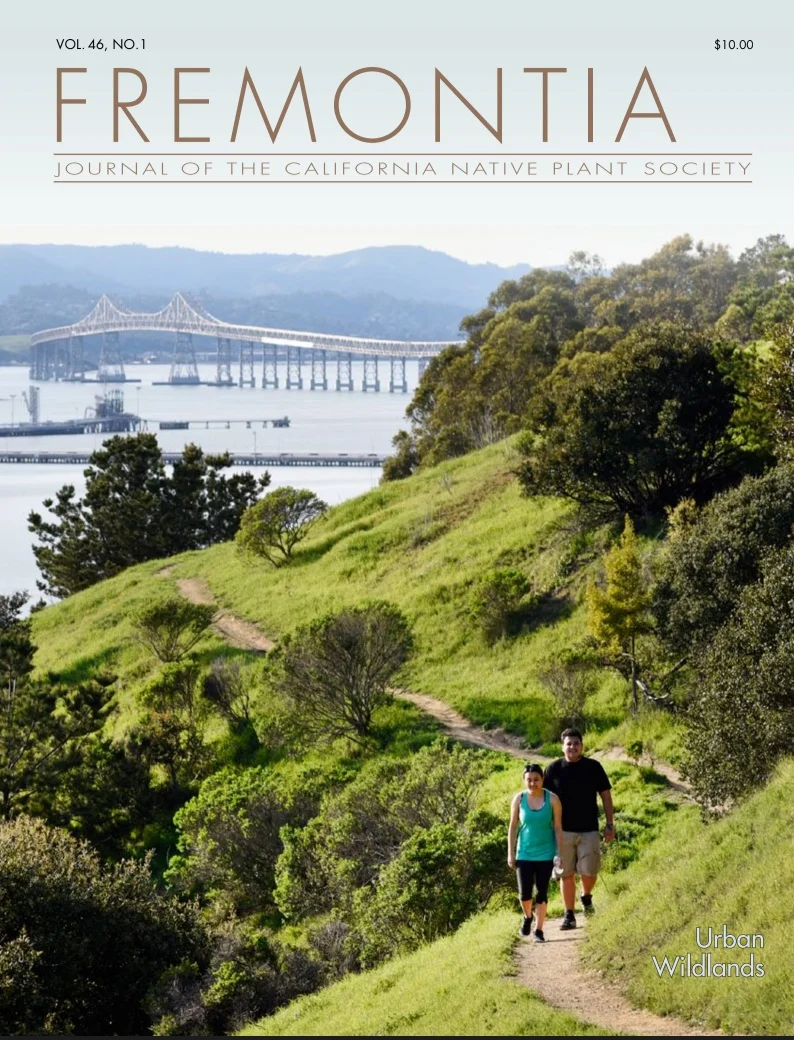
The California Native Plant Society – CNPS – has been protecting native plant species in California since 1965. Conservation efforts for plants and animals nearly always requires protecting and enhancing habitat, and increasing urbanization is a primary threat to plant habitats in California. In 2018 the Schwemm Foundation assisted CNPS in publishing a special edition of their publication Fremontia that focused on the importance of protecting open space areas near human population centers, sites often referred to as the urban-wildland interface.
Read MoreSeven species of abalone, large mollusks also known as sea snails, occur in California and along the Pacific coast. White and black abalone are listed as endangered, while pink, pinto, and green abalone are species of conservation concern. Though adult abalone have large shells and are attached to the ocean floor, baby abalone (larvae) are free floating in ocean waters and at high risk from predation and other threats, and few survive to settle and mature.
Read MoreProject Coyote works to promote co-existence between humans and wild predators. One of Project Coyote’s most successful programs, Ranching with Wildlife, aims to assist ranchers with employing non-lethal means of predator deterrence for livestock protection. A number of scientifically-based and cost-effective methods have proven successful, including the use of trained dogs to protect sheep.
Read MoreIn 2017 The Schwemm Foundation assisted the SBHM with a project to digitize a portion of their collection of glass negatives containing unique images collected in the Santa Barbara region in the late 19th and early 20th centuries.
Read MoreA particular challenge for historians is bringing history to people who might not otherwise feel they have a relationship with the past. The Schwemm Foundation recently partnered with the Shelton McMurhpey Johnson House in Eugene, Oregon to create and display historical posters on utility boxes on busy street corners throughout the region.
Read MoreThe Truckee River watershed drains over 3,000 square miles, and includes pristine but also highly developed lands. Every fall season the Truckee River Watershed Council organizes Truckee River Day, where over 400 volunteers participate in projects that help protect the resources within the watershed.
Read MoreThe California Urban Streams Partnership (CUSP) is an organization of local, regional and statewide groups working together to protect, restore, and steward urban streams and watersheds in California. CUSP advocates for the improvement of wildlife habitat, the return of functioning ecosystems, and the betterment of urban environments and quality of life. The Schwemm Foundation provided funding for two workshops to teach homeowners and city staff in the San Francisco area communities of Richmond and Oakland how to incorporate soil bioengineering to stop streamside erosion, reduce flooding potential and enhance steelhead habitat on urban streams in those cities. The workshops included approximately 40 people and trained several environmental interns. They also recruited members of the Green Collar Corps – a group that exposes disadvantaged community members to environmental careers – to help facilitate the trainings. CUSP was able to leverage the grant from the Schwemm Family Foundation with other funding sources to purchase tools and supplies needed to conduct the workshops. http://www.earthisland.org/cusp/index.html
Read More